
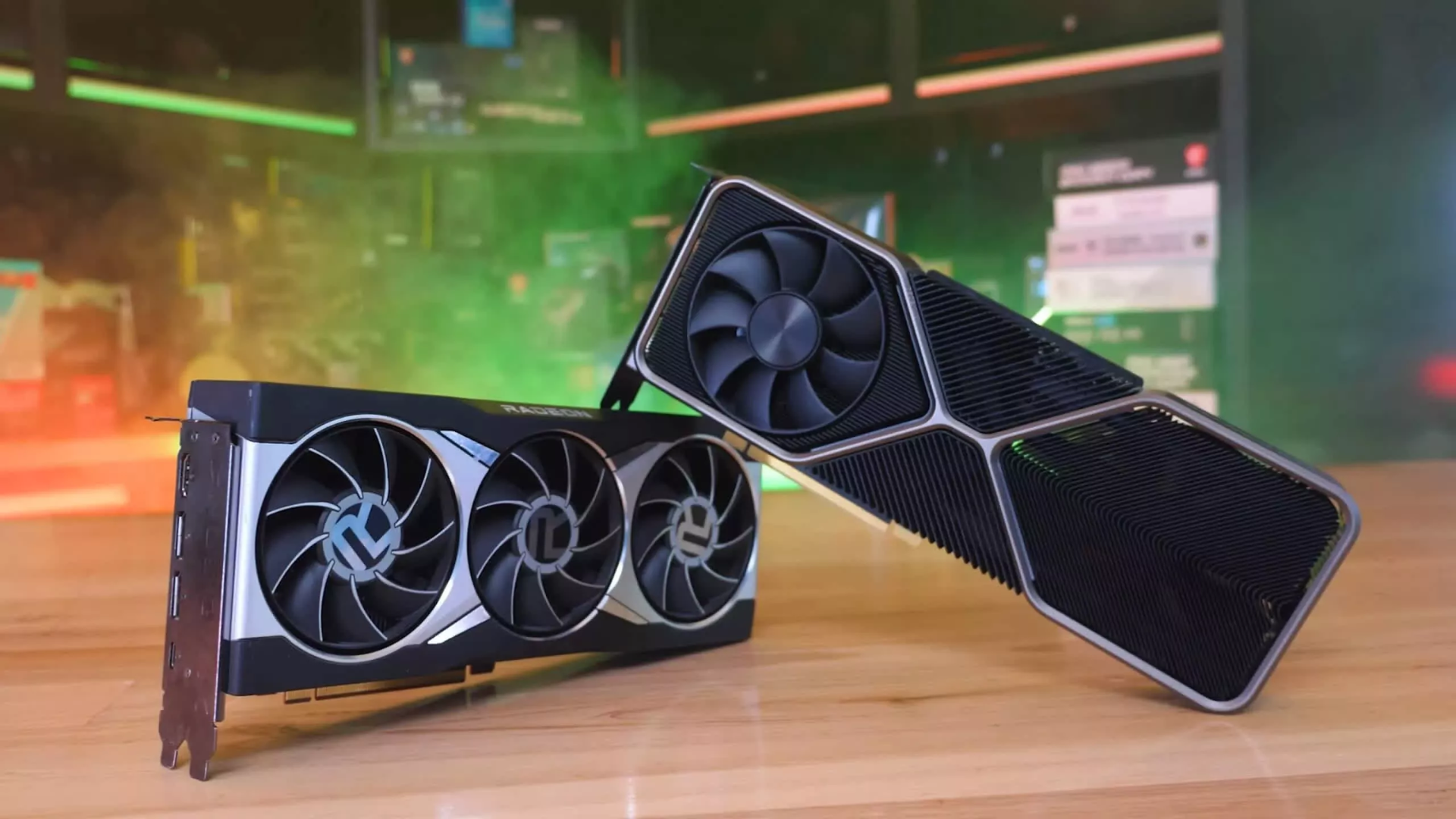
When choosing your next graphics card, you’ll likely focus solely on the model you want (for example, a Radeon RX 5700), but the manufacturer choice will probably come down to whoever offers it at the lowest price. However, not all manufacturers produce graphics cards equally well, so in this article, we’ll show you a reliability comparison of graphics cards from different manufacturers.
Table of Contents
- Graphics Card Reliability: AMD vs. NVIDIA
- Which Graphics Card Manufacturer Is the Most Reliable?
- Reliability and Manufacturers: An All-or-Nothing Decision
- The Manufacturer Affects Not Only the Price, But Also the Materials
- Before You Spend Your Money
- Final Recommendations
The data we’ll show you below has been extracted from a report by Mindfactory, a German distributor so large that it’s used as a benchmark for calculating the market share of AMD, NVIDIA, and Intel for both processors and graphics cards in Europe. Therefore, this data cannot be extrapolated worldwide, but it does provide a fairly accurate idea of the reliability of manufacturers’ graphics cards.
The data, by the way, is based on the RMA rate for graphics cards sold; that is, users who have experienced a problem with their graphics card and have processed their warranty claim.
Graphics Card Reliability: AMD vs. NVIDIA
Let’s begin with a global comparison, disregarding the manufacturer and focusing solely on whether the graphics card has an AMD or NVIDIA GPU. The following graphics card models were considered in this comparison:
- AMD: Radeon RX 5700 XT, RX 5700, RX 5600 XT, and RX 5500 XT.
- NVIDIA: GeForce RTX 2080 Ti, RTX 2080 SUPER, RTX 2080, RTX 2070 SUPER, RTX 2070, RTX 2060 SUPER, RTX 2060, and GTX 1660 Ti.
This is the RMA rate (the number of users who have had to process a warranty claim for their graphics card) for AMD and NVIDIA, broken down by model:
| Graphics Card Model | Sales | Returns | RMA Rate |
| AMD RX 5700 XT | 32480 | 1139 | 3.51% |
| AMD RX 5700 | 12380 | 400 | 3.24% |
| AMD RX 5600 XT | 2380 | 50 | 2.09% |
| AMD RX 5500 XT | 3210 | 36 | 1.13% |
| NVIDIA RTX 2080 Ti | 9530 | 492 | 5.17% |
| NVIDIA RTX 2080 SUPER | 9750 | 129 | 1.33% |
| NVIDIA RTX 2080 | 10430 | 367 | 3.52% |
| NVIDIA RTX 2070 SUPER | 36570 | 458 | 1.25% |
| NVIDIA RTX 2070 | 21700 | 998 | 4.60% |
| NVIDIA RTX 2060 SUPER | 13900 | 265 | 1.91% |
| NVIDIA RTX 2060 | 10710 | 189 | 1.77% |
| NVIDIA GTX 1660 Ti | 9620 | 116 | 1.21% |
Based on this data, we see that AMD graphics cards have an average RMA rate of 3.22%, while NVIDIA graphics cards have an average warranty management rate of 2.47%. It’s worth noting the return rate of over 5% for the RTX 2080 Ti, which, on average, is the graphics card with the highest failure rate.
Which Graphics Card Manufacturer Is the Most Reliable?

Having seen the comparison between AMD and NVIDIA by graphics card model, it’s time to see which manufacturer offers the greatest reliability in its graphics cards, following the exact same criteria as in the previous section.
This is the RMA rate breakdown by graphics card manufacturer:
| Manufacturer | Sales | Returns | RMA Percentage |
| AMD | 3210 | 81 | 2.54% |
| ASRock | 2250 | 48 | 2.15% |
| Gigabyte (AMD) | 5990 | 176 | 2.94% |
| MSI (AMD) | 8290 | 161 | 1.95% |
| PowerColor | 12680 | 684 | 5.40% |
| Sapphire | 13360 | 321 | 2.41% |
| XFX | 4660 | 153 | 3.29% |
| Gainward | 6020 | 196 | 3.27% |
| Gigabyte (NVIDIA) | 27480 | 689 | 2.51% |
| INNO3D | 120 | 3 | 3.00% |
| KFA2 | 26560 | 477 | 1.80% |
| MSI (NVIDIA) | 50860 | 1312 | 2.58% |
| Palit | 7150 | 232 | 3.25% |
| PNY | 460 | 8 | 1.72% |
| Zotac | 3560 | 97 | 2.73% |
Here we find that the most reliable manufacturer is KFA2, and it is also the third manufacturer that sells the most NVIDIA graphics. In this case, the worst manufacturer seems to be PowerColor, with a return rate of more than 5%, followed by XFX, Gainward, and Palit.
And for Intel graphics?

For a few years now, Intel has also been manufacturing dedicated graphics for PCs. In general, the models launched by the brands themselves tend to be less prone to failures. The real problem with Intel’s dedicated GPUs is that we do not really know what the RMA of each of the brand’s graphics cards is because they have not had much success in sales either.
There are times when we can find a good product with an unreliable assembler
One of the biggest problems we face when guided by the comments we can find on the internet about a product is the fact that there are people who have had positive or negative experiences with a product. In general, this usually implies that a person who has had a good experience with a poor quality product may end up encouraging others to buy it, when in reality this should not be the case.
Reliability and manufacturers, all or nothing
The graphics card is one of the hardware elements that suffer the most in a PC. For this reason, it is especially important to acquire a graphics card that has good reliability and that is from a manufacturer that provides guarantees. Therefore, when choosing the brand of your next graphics card, you should consider its reliability, but also whether it’s a trustworthy manufacturer, or at least one with a good reputation for after-sales service.
The manufacturer not only affects the price, but also the materials.
Once we’ve seen which graphics card manufacturers are the most reliable, we can see where the difference between quality and price lies. The reliability of graphics cards ultimately depends largely on the materials used in their manufacture, as well as the way the heatsink is integrated. In the best-case scenario, GPUs from certain manufacturers use low-quality materials, which can cause defects after only a few years of use.
Before You Spend Your Money
As we mentioned earlier, the best thing you can do when buying a graphics card is to check if the brand is reliable. In any case, our recommendation is not to skimp on this: if you’re going to spend a good amount of money on a new graphics card, invest a little more and choose a trusted manufacturer.
A Few Final Recommendations
In short, you now have some empirical data to rely on. It’s very important that, when making this decision, you consider the repercussions it will have on other components that are closely linked to the brand you choose for your graphics card. This relates, for example, to the technologies it’s capable of using, such as DLSS for NVIDIA or FSR for AMD.
So, if you keep this in mind, go ahead and buy any graphics card from the wide variety available on the market. But if not, then research and analyze all the information you can gather.