
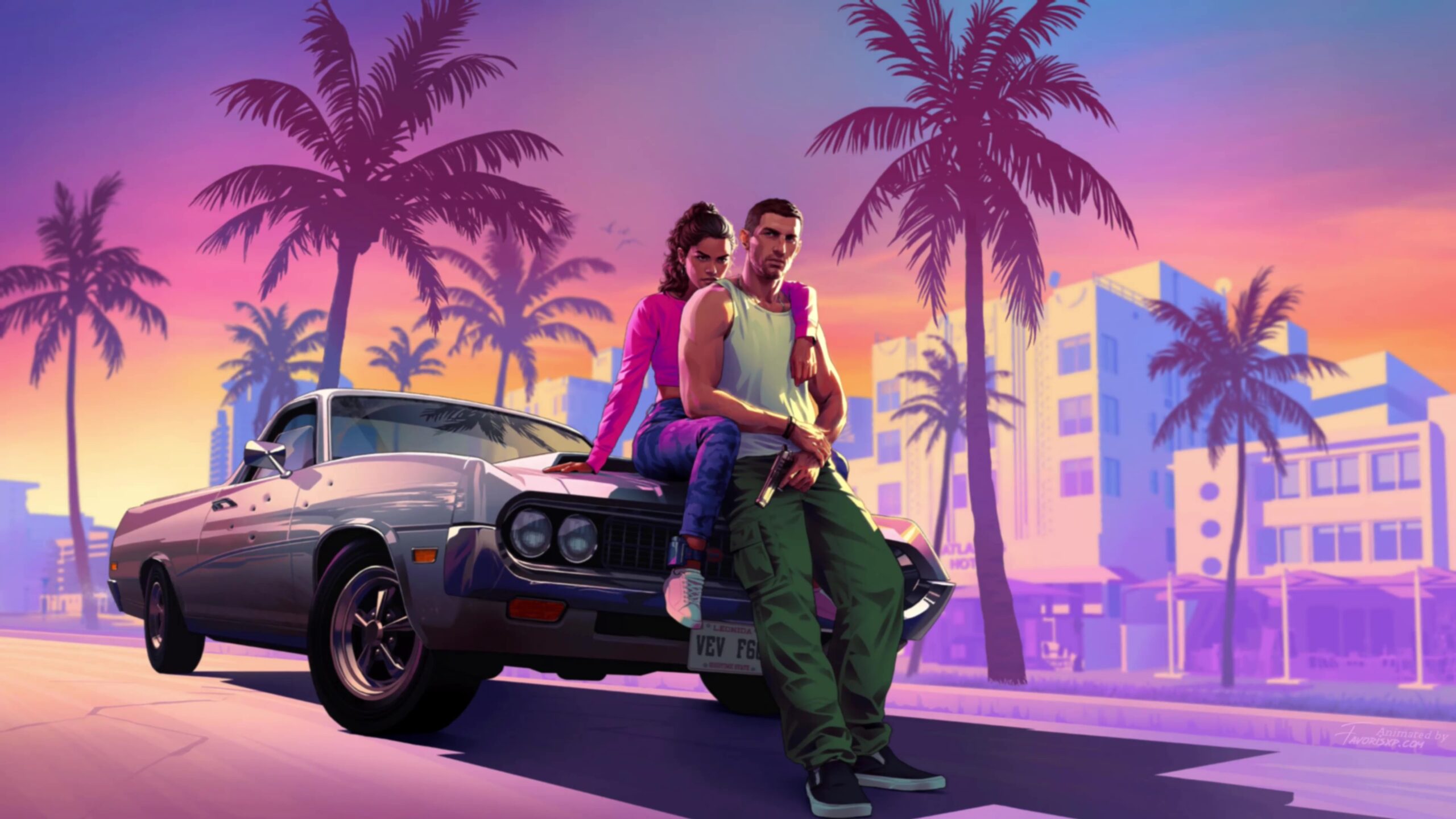
The 30 FPS Dilemma: Will a Locked Frame Rate Ruin GTA 6 on PS5?
Let’s be truthful. We’ve had it good.
Since the introduction of the PlayStation 5, console gamers have finally experienced the joy of high-quality gaming: the seamless, quick responsiveness of 60 frames per second (FPS). We have spent years switching directly to “Performance Mode” within various game menus, happily sacrificing some enhanced resolution to avoid the lagging, sluggish sensations of the past.
However, with the release of Grand Theft Auto 6 on the horizon, a chill is sweeping through the gaming community. Tech analysts, including the specialists at Digital Foundry, are cautioning us about a harsh truth: GTA 6 is anticipated to be fixed at 30 FPS on the standard PlayStation 5. In fact, it may be capped at 30 FPS even on the more powerful PS5 Pro.
This brings forth a significant, divisive question. If the most awaited game of the decade launches on your shiny next-gen console limited to 30 FPS, is that a dealbreaker? Or is that simply the cost we bear for genuine, era-defining excellence?
Why 60 FPS is a “Bridge Too Far”
To comprehend why this situation arises, we need to look beneath the surface. It’s tempting to point fingers at developers or label them as “lazy”—but that greatly misrepresents how game engines function.
When a game is limited to 30 FPS, the constraint usually lies not with the graphics card (GPU) but rather with the processor (CPU).
The PS5 and Xbox Series X utilize Zen 2 CPU architecture. This was excellent technology upon the consoles’ launch, but it is beginning to show its limitations. In an expansive game like GTA 6, the CPU must handle:
- The intricate AI behaviors of hundreds of distinct NPCs visible at once.
- Large-scale, dense traffic simulation and vehicle dynamics.
- Variable, real-time weather conditions and procedural destruction features.
Although you can decrease the screen resolution to lessen the load on the GPU, lowering the CPU burden is not as simple without eliminating the very elements that make the virtual world feel like a vibrant, dynamic ecosystem. If Rockstar aims for an environment with exceptional crowd density and active physics, 30 frames per second becomes the necessary compromise.
The “Instant Skip” vs. “Must Play” Divide
Recently, technology surveys have revealed an intriguing and fluctuating divergence within the community. A notable percentage of gamers—over 50% in some enthusiast circles—believe that a 30 FPS cap renders GTA 6 an “instant skip” or a “wait for the PC version” game.
- For individuals who predominantly use high-performance PC setups or have spent years enjoying fast-paced shooters at 120Hz, reverting to 30 FPS feels akin to wearing someone else’s blurred lenses.
- The experience seems sluggish, unresponsive, and outdated.
- The camera movements appear jerky, and speeding while driving can resemble a slideshow.
Yet, let’s introduce a dose of realism. Will the average gamer genuinely choose to forgo GTA 6?
Certainly not.
Grand Theft Auto has become a significant cultural event. Upon its release, the internet will undoubtedly explode with spoilers, memes, and content that goes viral. The urgency to be part of the conversation (FOMO) will be extremely intense. Countless gamers who assert that they “won’t settle for 30 FPS” are likely to find themselves at a store or clicking “download” as soon as it is available.
The Bright Side: Not All 30 FPS Options Are the Same
In the event that we have to accept 30 FPS, it is essential to acknowledge that Rockstar has an unparalleled ability to make lower frame rates feel unexpectedly smooth.
Consider Red Dead Redemption 2 on the PlayStation 4. It ran at a steady 30 FPS, yet the experience was vastly engaging, cinematic, and impactful in every desirable way. This success can be attributed to:
- Flawless Frame Timing: Providing frames at an impeccably steady rate, eliminating any tiny hitches.
- Exceptional Motion Blur: Seamlessly blending frames to replicate how our eyes naturally process rapid movement.
- The 40 FPS Option: For users with 120Hz televisions, there is a genuine chance of experiencing a “balanced” 40 FPS setting. Due to the mechanics of display timing, 40 FPS is perfectly positioned between 30 and 60 in terms of frame delivery timing, creating a surprisingly fluid experience without overworking the console’s processor.
The Conclusion: A Concern, Yet Not a Showstopper
Would a fixed 30 FPS on the PS5 be disappointing? Absolutely. It is entirely reasonable to feel somewhat disheartened that our powerful, next-gen consoles cannot achieve the 60 FPS ideal for one of the most significant launches of this generation.
However, is it a showstopper? Not at all.
If a constant 30 FPS is necessary to create a game environment that genuinely feels next-gen—with intelligent NPCs, bustling cities, and astonishing realism—many of us will adapt just half an hour after gripping the controller.
What about you? Are you prepared to exchange frame rates for unparalleled world detail, or are you waiting for the eventual PC version?